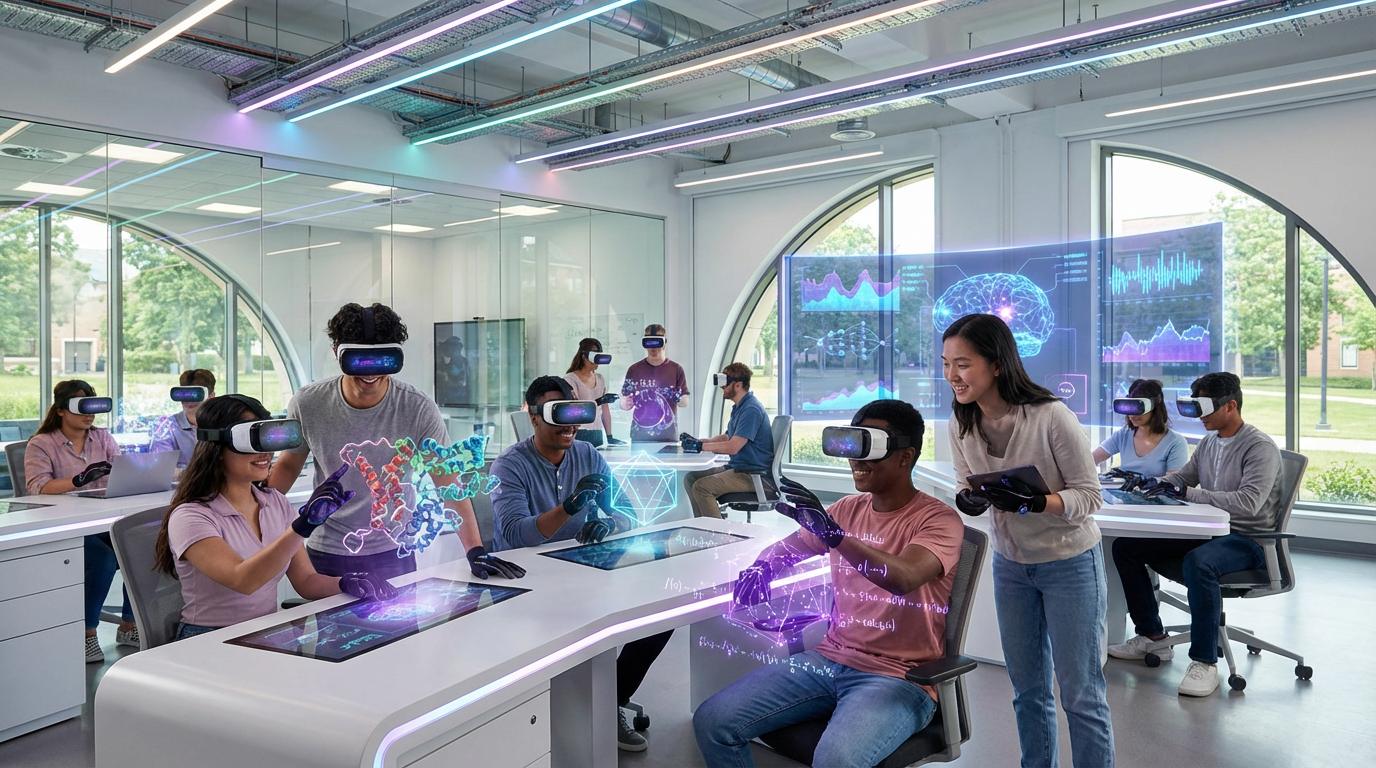
The Power of Immersive Technologies
AI and XR technologies are revolutionizing STEM education, creating unprecedented opportunities for engagement, comprehension, and retention.
Dream Center Academy's Summer 2025 pilot program achieved +40% improvement in math problem-solving speed, exceeding target goals through VR-based spatial reasoning and gamified challenges.
Major impact achieved through immersive AR storytelling and interactive reading environments. Title I students (Grades 1-10) showed dramatic improvements in vocabulary and comprehension.
All 27 Title I students in the pilot program maintained 100% engagement rate with zero dropouts—a 30-40% improvement over traditional tutoring methods (65% average).
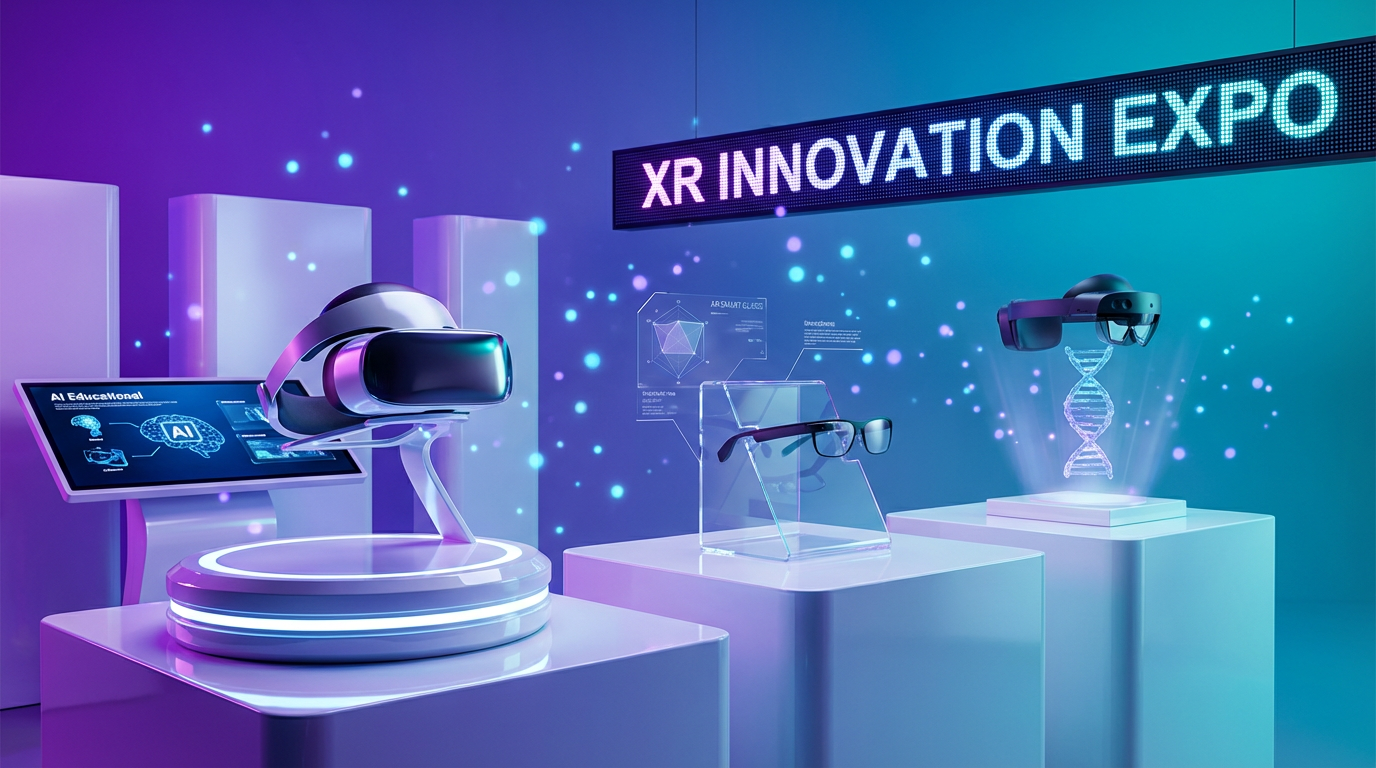
Key Technologies Driving Innovation
Virtual Reality (VR)
Fully immersive environments for exploring concepts impossible to replicate in physical classrooms, from molecular structures to space exploration.
Augmented Reality (AR)
Overlay digital information onto the real world, enabling interactive learning experiences with equipment repair, anatomical visualization, and more.
AI-Powered Personalization
Intelligent systems that adapt content and experiences to individual learning styles, providing real-time feedback and customized learning paths.
Your Roadmap to Successful Implementation
A comprehensive, research-backed framework for planning and executing transformative AI + XR + STEM/STEAM expos.
Strategic Planning Phase
The foundation of any successful expo begins with clearly defined goals and comprehensive planning. This phase establishes the vision, identifies stakeholders, and creates a roadmap for success.
Identify specific learning outcomes and engagement goals
Align with curriculum standards and educational objectives
Determine target audience and their specific needs
Recruit educators, technology specialists, and event coordinators
Engage students, parents, and community partners
Establish clear roles, responsibilities, and communication channels
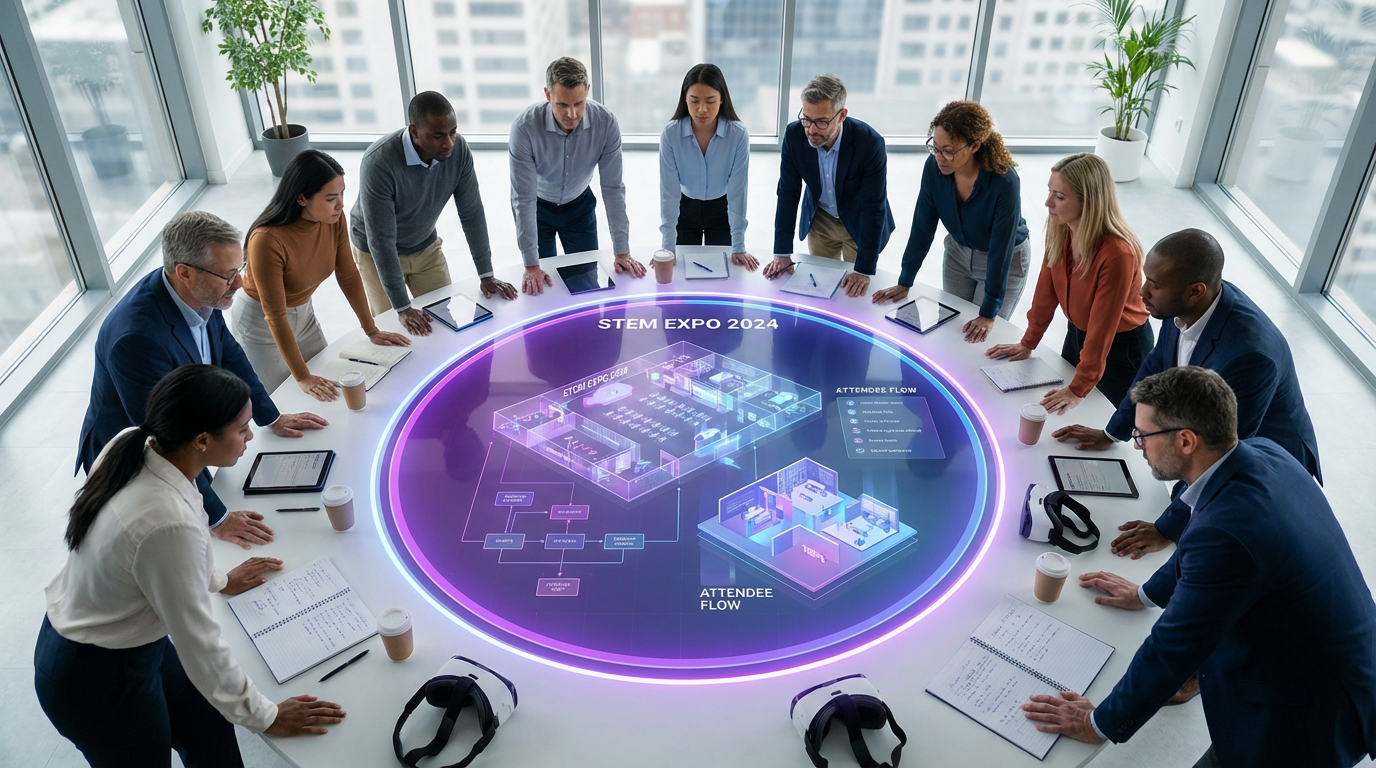
Addressing Common Challenges
Understanding potential barriers and implementing proven solutions ensures successful adoption of AI and XR technologies.
Hardware, software, and infrastructure costs can be substantial barriers to entry.
Solutions:
- •Flexible payment plans (ClassVR: £170/month)
- •Bulk purchase discounts through resellers
- •Start with small pilot programs
- •Seek grants and technology partnerships
Inadequate WiFi, physical space, or charging facilities can hinder implementation.
Solutions:
- •Involve IT departments early in planning
- •Upgrade network infrastructure incrementally
- •Use 3 DoF apps for limited space scenarios
- •Implement device rotation schedules
Lack of professional development can lead to low adoption and ineffective use.
Solutions:
- •Comprehensive hands-on training sessions
- •Train-the-trainer models for scalability
- •Dedicated technical account managers
- •Peer learning communities and ongoing support
Finding content that aligns with specific curriculum standards can be challenging.
Solutions:
- •Use content libraries like Discover XR
- •Test demo versions before purchasing
- •Collaborate with content developers
- •Develop custom solutions for specific needs
Device management, troubleshooting, and maintenance can overwhelm educators.
Solutions:
- •Implement device management platforms
- •Establish clear troubleshooting protocols
- •Provide dedicated technical support teams
- •Create student tech helper programs
Data privacy, student safety, and ethical considerations require careful attention.
Solutions:
- •Ensure FERPA and COPPA compliance
- •Implement robust data protection policies
- •Establish clear usage guidelines
- •Regular safety training and monitoring
Proven Case Studies
Learn from organizations that have successfully implemented AI and XR technologies in educational settings.
Lockheed Martin transformed a school bus into a virtual reality experience by replacing windows with transparent 4K displays. Students experienced driving on the surface of Mars while traveling through Washington DC streets.
Key Outcomes:
The Jackson School uses Oculus Rift headsets to make learning easier and more interactive for children with special needs, helping them visualize lessons for better understanding.
Key Outcomes:
Labster offers 100+ virtual lab simulations for chemistry, biology, and physics, enabling students to conduct experiments safely without physical lab constraints or hazardous materials.
Key Outcomes:
ClassVR serves 20,000+ schools across 90+ countries with comprehensive VR/AR solutions, including 300,000+ curriculum-aligned resources and complete device management capabilities.
Key Outcomes:
Ready to Transform Your STEM Education?
Start planning your AI + XR + STEM/STEAM expo today with our comprehensive framework and proven best practices. Create immersive learning experiences that inspire the next generation of innovators.